

Load securing for vans – Secure loads in compliance
with the law with Sortimo!
Professional and legal securing of loads is child’s play for Sortimo van racking including the integrated ProSafe load securing concept. More accessories can be used to lash additional transport goods so that you are on the safe side, even on tight bends or with sharp braking.


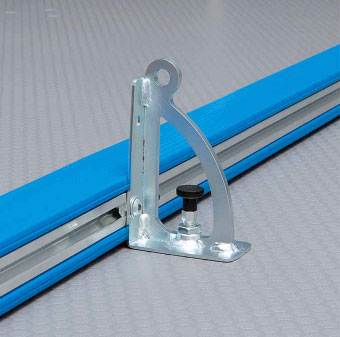





Product overview: Sortimo ProSafe load securing for vans
What is part of proper load securing?


Restraint poles for load securing:
Easy securing of large items in the cargo space.
With the telescopic restraint poles, large, bulky goods can be easily and safely locked in place for transport. Thanks to the telescopic function, the restraint poles can be used flexibly and transported in a space-saving way. In addition, it is possible to continue to use the restraint poles when changing vehicles.


ProSafe load securing equipment suitable for your vehicle

Safe van racking

Securing loads on the roof with the roof rack TopSystem

The vehicle’s original lashing points are retained
Important load securing regulations at a glance
Secure your load in compliance with the law with Sortimo!
Intact securing equipment and load-securing surface
All securing equipment must be in perfect condition. In order to guarantee maximum safety, the load area must be swept clean and be free from oil at all times.
Adequate ventilation
When transporting gases, the vehicle must have adequate ventilation (floor, roof or side vents).
Roadworthiness
The vehicle and load must be checked for roadworthiness before setting off. You need to check the load securing after sharp braking or other unusual load levels.

The right securing system
The load-securing equipment and the vehicle must be suitable for transporting the load. The lashing facilities must have an adequate load-bearing capability (marking by sticker) and must be suitable for securing the load. The permissible total weight and the permissible axle loading of the vehicle must also be taken into account.
Stable loading
The load must not impair handling and stability. The change in the centre of gravity from the load does, however, lead to modified handling of the vehicle. Heavy loads should always be stowed as low as possible in the vehicle. The load must be secured from slipping and tipping over.
Load securing methods: What types of load securing are there?
The most important rules as an overview!
Load security made easy
Read here about the responsibilities and obligations in the area of load securing. You will also find our useful tips and tricks for professional load securing in commercial vehicles.
mySortimo graphics
Design your vehicle decals easily online.

FAQ – frequently asked questions about load securing in vans
What are the driver’s obligations for load securing?
- Obligation to check load securing and load distribution before setting off.
- Obligation to check and rectify load securing during transport.
- Obligation to adapt driving behaviour to suit the load.
- Obligation to check load securing if someone else has loaded the vehicle.
What are the dispatcher's obligations for load securing?
The obligations of the dispatcher include proper stacking, stowing, lashing, wedging, strapping and securing of the load so that, during normal carriage in daily traffic (even in extreme situations), the forces acting on the vehicle do not endanger or harm goods, persons or the vehicle.
What are the freight forwarder’s obligations for load securing?
Safe loading includes the obligation of the freight forwarder to provide a suitable vehicle. This must be able to transport the load on the road in a safe manner, taking into account the stipulated dimensions, weights and axle loadings in normal daily carriage (including in extreme situations). In addition, the freight forwarder/contractor is obliged to provide the loaders and vehicle users with adequate training to enable them to load the vehicle correctly and to use it correctly on the road.
What are the vehicle owner's obligations for load securing?
The vehicle owner is responsible for the proper condition and correct equipping of his vehicle. This also applies to equipment with load-securing items (§§ 30 and 31 German Regulations Authorising the Use of Vehicles for Road Traffic). The Higher Regional Court in Düsseldorf decided, in their resolution dated 18/07/89, that the owner must comply, in general, with the VDI Directive 2700. That means that the vehicle owner must also ensure that the vehicle is equipped with adequate load-securing equipment, suitable for the load, so that the driver can carry out load securing on the basis of the VDI Directive 2700. The vehicle owner must not authorise the use of unsuitable vehicles.
What are the loader's obligations for load securing?
The basis for the obligation for load securing by the loader is § 22 German Road Traffic Regulations, since it is not directed exclusively at the driver, as is generally assumed. Here the loader is seen as the “manager of the loading tasks” and, for the carriage of hazardous goods, the “person commissioned by the loader”, i.e. the person entitled to take independent decisions in terms of loading. Unless there is a special individual contract provision, the responsibility of the superior extends right up to the company management. This means that the company management is responsible for load securing unless they have transferred responsibility to a subordinated person. Under the law the obligation of load securing is incumbent on the loader.